Medical Articles
Understanding Fever (Part 2)
05.05.2026
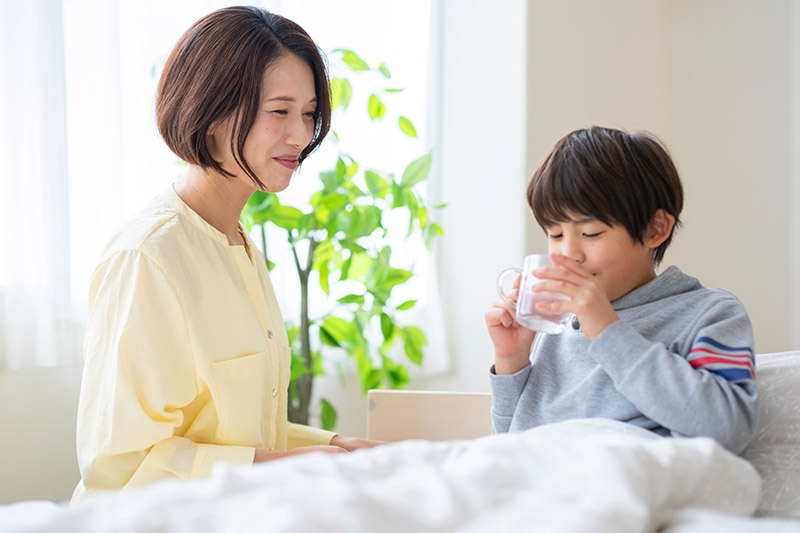
Last time, we discussed that by Japanese standards, a fever is defined as 37.5°C or higher and a high fever as 38.0°C or higher, with 38.0°C serving as a common benchmark for seeking medical attention. But if your child hits that 38.0°C mark, should you rush to the hospital immediately?
It is only natural to feel anxious when your child has a fever. But what specifically are parents worried about? According to statistics, the top concerns are: "Dehydration" (74%), followed by "Brain damage" (70%) and "Seizures" (66%). Given that severe complications are statistically rare, worrying about dehydration is actually a very appropriate and practical concern. I would like to address each of these, starting with dehydration.
Is the concern about dehydration valid? Yes, absolutely. When a child has a fever, they lose fluids more quickly, increasing the risk of dehydration. Frequent fluid intake is essential. However, the challenge is that feverish children are often lethargic and reluctant to drink, which understandably worries parents.
As a guideline for fluid intake, the American Academy of Pediatrics suggests that if a child is struggling to drink, start with 30 ml in the first hour, then gradually increase to 60 ml as they tolerate it. The secret is to offer small amounts frequently, as drinking too much at once can trigger vomiting. For infants, breast milk or formula is perfect. For older children, oral rehydration solutions, diluted apple juice, or jelly are all excellent for hydration. If they refuse to drink, you can try offering small ice chips to suck on—just be careful they are small enough to avoid any choking risk.
Author Bio
Dr. Eiji Shimada
Oriental Wellcare Group Founder
Board-certified radiologist. He manages one of Japan’s largest independent teleradiology service companies, receiving more than 10,000 imaging interpretation requests per month from over 250 hospitals nationwide. He also has a track record as a pioneer of home healthcare in Japan, having founded and managed one of the country’s largest medical corporations specializing in home-based medical care.
In November 2014, he founded Oriental Wellcare Group. Today, the group operates a broad network of medical institutions across three countries: the Philippines, Malaysia, and the United States. He is dedicated to creating healthcare environments where Japanese residents overseas, including those living in the Philippines, can receive advanced medical care with peace of mind.