Medical Articles
What Happens When You Become Infected with H. pylori?
18.10.2026
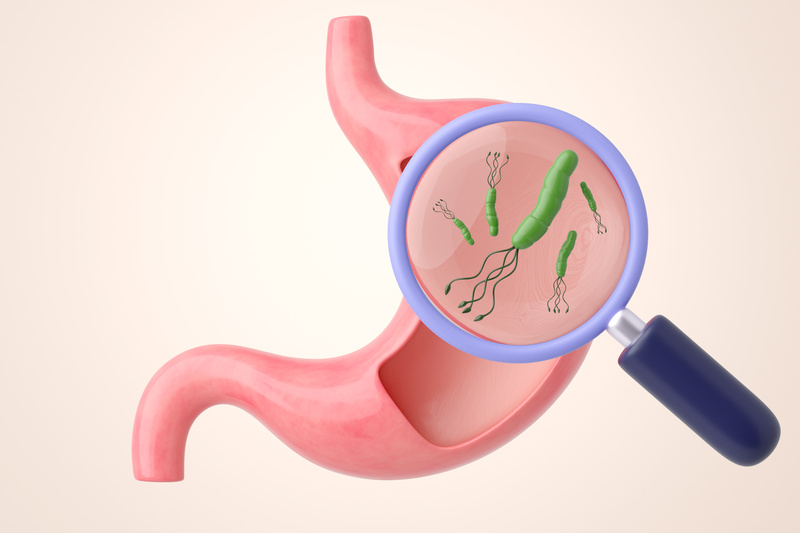
Have you ever heard of H. pylori? H. pylori is a type of bacteria that can live in the stomach for many years. Its official name is Helicobacter pylori.
The name itself tells us a little about this unusual bacterium. “Helico” refers to a spiral or helical shape, just like the “helico” in “helicopter.” “Bacter” means bacteria, while “pylori” refers to the pylorus, the lower part of the stomach near its outlet. In other words, the name describes a spiral-shaped bacterium that lives near the pylorus.
One of the most remarkable things about H. pylori is that it can survive in the highly acidic environment of the stomach. The stomach is strongly acidic to help digest food, making it a harsh environment for bacteria. However, H. pylori produces an enzyme called urease, which helps neutralize the acid around the bacterium, allowing it to survive in the stomach.
H.pylori has a slender, spiral-shaped body and several hair-like structures called flagella on one end. By rapidly rotating these flagella, it can move through the stomach’s protective mucus layer. The presence of H. pylori can cause inflammation and damage to the stomach lining, increasing the risk of gastritis, stomach ulcers, duodenal ulcers, and stomach cancer.
However, being infected with H. pylori does not necessarily mean that you will experience stomach pain or other symptoms. Many people have no noticeable symptoms at all. If symptoms do occur, it is important to seek medical attention promptly. Symptoms such as indigestion, heartburn, nausea, stomach pain when hungry, abdominal pain after eating, and loss of appetite may be associated with stomach problems, including H. pylori infection.
There are several ways to test for H. pylori, including blood, urine, stool, and endoscopic tests. One simple and highly accurate method is the urea breath test, which is painless and easy to perform. Breath samples are collected before and after taking a test substance, and the amount of carbon dioxide produced through the action of the urease enzyme is measured. If you notice anything unusual or have concerns about your stomach, don't hesitate to consult a healthcare professional.
Author Bio

Dr. Eiji Shimada
Oriental Wellcare Group Founder
Board-certified radiologist. He manages one of Japan’s largest independent teleradiology service companies, receiving more than 10,000 imaging interpretation requests per month from over 250 hospitals nationwide. He also has a track record as a pioneer of home healthcare in Japan, having founded and managed one of the country’s largest medical corporations specializing in home-based medical care.
In November 2014, he founded Oriental Wellcare Group. Today, the group operates a broad network of medical institutions across three countries: the Philippines, Malaysia, and the United States. He is dedicated to creating healthcare environments where Japanese residents overseas, including those living in the Philippines, can receive advanced medical care with peace of mind.